Cheonmasan Complex Observatory and Songdo Coastal Trail: A 2-Day Walking Itinerary in Busan
Cheonmasan Complex Observatory and Songdo Coastal Trail: A 2-Day Walking Itinerary in Busan
This two-day walking itinerary is designed for travelers who want to explore Busan's historic downtown and western coastline on foot. On Day 1, take in Gamcheon Culture Village, Cheonmasan Complex Observatory, and Jagalchi Market. On Day 2, enjoy a scenic walk along the Songdo coast. The main criteria for choosing this route is simple: whether you are comfortable walking uphill and climbing stairs for extended stretches. Cars cannot access the front of Cheonmasan Complex Observatory, and the Songdo route weaves along cliffside boardwalks and stairs. If you have strollers or companions who find long walks challenging, it is best to break the journey into smaller segments.
Cheonmasan Complex Observatory is a new facility that has been in its soft opening phase since June 9, 2026. Because it is not yet officially opened, operating hours, accessible areas, and admission fees are subject to change. The details below are based on announcements made by Busan's Seo-gu District Office during the soft opening. As of late October, it is best to check the current operating status with the Seo-gu District Office before heading out.
- Cheonmasan Complex Observatory: Located at 170 Amicheonmajeonmang-gil, Seo-gu, Busan. Walk up from Gamcheon Culture Village or the entrance of the Busan Education History Museum. Temporary operating hours are 10:00 AM to 5:00 PM; closed on Sundays, Mondays, and statutory public holidays.
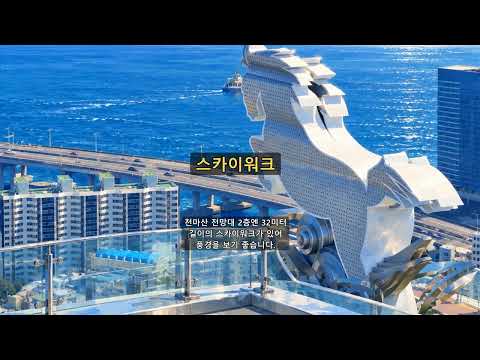
- Observatory Highlights: The 2nd floor features an ecology exhibition hall and a roughly 32-meter skywalk, while the rooftop hosts the "Cheonma Lovers" sculpture and an open-air observation deck. The cafes on the 3rd and 4th floors are not yet open.
- Gamcheon Culture Village: Free admission. Stamp tour maps cost 2,000 KRW each. Because this is an active residential neighborhood, please respect residents' privacy and refrain from flying drones.
- Jagalchi Hagfish (Gomjangeo) Alley: Around 130 eateries cluster near Exit 10 of Jagalchi Station. Their hallmark is grilling hagfish over briquette embers.
- Songdo Coastal Trail: Begins at the Songdo Cloud Trails (free; 6:00 AM–11:00 PM), winds along the Songdo Coast Bolle-gil, and leads to the Songdo Yonggung Suspension Bridge (general admission 1,000 KRW; 9:00 AM–5:00 PM from Oct to Feb).
- What to Bring: Water, comfortable walking shoes, and a hat or parasol for sun protection. Since the observatory cafe is not yet open, you will not be able to purchase drinks at the top.
Cheonmasan Complex Observatory: Getting There on Foot and Visiting Details
Cheonmasan Complex Observatory is a four-story facility built by Busan's Seo-gu District along the foothills of Mount Cheonmasan. The main access road is Amicheonmajeonmang-gil. Visitors must walk up the trail and access road starting from Gamcheon Culture Village or the Busan Education History Museum entrance. Vehicle access is restricted, and reports indicate an uphill trek of about 1.6 to 1.7 kilometers, so be sure to budget plenty of walking time.
The district opted for a soft opening to test operations and safety management protocols ahead of the grand opening. During this period, the ecology hall, skywalk, rooftop deck, and sculpture park are open to the public. The skywalk is currently free of charge during the trial run. However, access to parts or all of the facility may be restricted during overcrowding, severe weather, or maintenance issues.
Operating hours are 10:00 AM to 5:00 PM. It is closed on Sundays, Mondays, and statutory holidays, so weekend visitors should plan their visit for Saturday. The district plans to officially open the venue once facilities are upgraded and the cafe opens. Plans have also been announced to connect the observatory with the upcoming Cheonmasan Monorail. Until the monorail is built, reaching the observatory on foot remains the standard way up.
What to See: The Skywalk and the Cheonma Lovers Sculpture
The 2nd-floor skywalk is a cantilevered deck extending out over the hillside. Photos from the site show a rounded deck end enclosed by glass railings. Sections of the floor feature blue panels, supported from beneath by thick diagonal steel pillars. Over the railing, you look down on hillside road (sanbokdoro) neighborhoods packed with high-rise apartments and buildings of varying heights. Travelers sensitive to heights may feel more comfortable viewing the scenery from the inner walkway rather than right against the glass.
The highlight of the rooftop is the "Cheonma Lovers" sculpture. It depicts a silver horse rearing up on its hind legs. Its body is perforated with fine cutouts, while the mane and tail are crafted from layered, angular metal plates. Standing directly beneath it and looking up offers an intimate look at the flowing, pierced metal sheets. To frame the entire horse against the ocean and coastal roads, step back toward the curved glass deck railing.
The rooftop affords sweeping vistas out toward the sea. The view captures long bridges spanning the water beyond forest-covered hills, ships and cranes docked at the piers, and expansive blue-roofed port buildings. With the harbor and the historic downtown visible in a single panoramic frame, it is a great spot to orient yourself with the geography of the South Port (Namhang). This makes navigating toward Jagalchi Market and Songdo later much more intuitive.
The 2nd-floor ecology hall and the adjacent 3,000-square-meter sculpture park are also accessible during the soft opening. Since you have already made the uphill climb, exploring the indoor exhibits and outdoor sculptures makes the effort well worthwhile.
Exploring Gamcheon Culture Village En Route to the Observatory
Gamcheon Culture Village is a terraced hillside community situated along Gamnae-ro in Saha-gu, Busan. Historical records trace its origins to refugees from the Korean War and followers of a new religious movement who settled here together. After being selected for the Ministry of Culture, Sports and Tourism's Village Art Project in 2009, murals and art installations transformed it into the vibrant landmark known today. According to Saha-gu District data, more than 3 million people visit each year, with international travelers making up over 80% of the total.
Admission is free. Purchasing a stamp tour map (2,000 KRW) at the information center helps support neighborhood upkeep and makes tracking down specific artworks much easier. If you are traveling with children, collecting stamps adds an engaging challenge to navigating the stairways and alleyways.
Keep in mind that this is an active residential neighborhood. Avoid peering into windows or private courtyards, keep noise to a minimum, and refrain from flying drones. Saha-gu has designated four zones within the village as special management areas, restricting visiting hours for tourists and tour vehicles in dense residential sections. Plans have also been announced to deploy 35 neighborhood stewards and install comprehensive information boards. Because specific designated hours have not yet been formally established, it is best to avoid entering residential alleys early in the morning or late at night. Parking is very limited, so arriving via public transit is strongly recommended.
Dinner at Jagalchi Market’s Hagfish Alley
After exploring the village and observatory, heading down to Jagalchi Market for dinner makes for a seamless evening itinerary. Near Exit 10 of Jagalchi Subway Station, right along the waterfront next to the market, a tented village of roughly 130 hagfish (gomjangeo) eateries stands side by side.
Jagalchi hagfish is traditionally grilled over briquette charcoal embers. This differs from the straw-grilled style typical of Gijang, making it an interesting contrast for culinary enthusiasts. The dish traces back to the period following Korea's liberation and the Korean War, when refugees around Jagalchi began grilling discarded hagfish to sell. In that sense, your dinner ties directly into the wartime refugee heritage you encountered earlier at Gamcheon Culture Village.
Prices and operating hours vary by vendor and change over time, so review the menu before taking a seat. For breakfast on Day 1, starting at a dwaeji gukbap (pork and rice soup) restaurant near Busan Station is a solid choice. Because there are many similarly named soup restaurants around the station, decide on your specific destination in advance to avoid mix-ups.
Songdo Coastal Trail: From Cloud Trails to Yonggung Suspension Bridge
Day 2 takes you along the shoreline of Amnam-dong in Seo-gu, Busan. Songdo Beach, Songdo Cloud Trails, Songdo Marine Cable Car, Songdo Coast Bolle-gil, and the Songdo Yonggung Suspension Bridge at Amnam Park all line this coastal stretch, allowing you to visit them sequentially on a single walking route.
The starting point, Songdo Beach, opened in 1913 as Korea's very first public bathing beach. In 2012, it was recognized in the Korea Tourism Organization's "Korea Tourism Guinness." From the beach to Turtle Island (Geobukseom), the Songdo Cloud Trails extend out over the open sea. Spanning a total length of 365 meters, a width of 2.3 meters, and a height of 9.3 meters, the entire walkway opened in June 2016. Portions of the floor feature transparent tempered glass, offering views of the waves churning right beneath your feet. The trail's curving design draws inspiration from the local legend of a young fisherman and a dragon princess. Entry is free, and it is open from 6:00 AM to 11:00 PM, making it an ideal spot to start your walk early in the morning.
The Songdo Coast Bolle-gil is a coastal walking trail leading from Songdo Beach through the Amnam Park perimeter road to the entrance of Amnam Park. Part of Galmaet-gil Trail Course 4-1, it follows cliffside wooden decks and staircases. While open year-round, the path runs directly alongside sheer rock faces, so avoid it during heavy rain or strong winds for safety. If your legs get tired, you can switch to the Songdo Marine Cable Car, which covers the 1.62-kilometer stretch between Songdo Beach and Amnam Park. Cabins are available in standard models and transparent-bottomed Crystal Cabins. Rates and operating hours vary, so be sure to check the official Songdo Marine Cable Car website beforehand.
The final destination, Songdo Yonggung Suspension Bridge, stretches from Amnam Park across the sea to Dongseom, a small uninhabited islet. It measures 127 meters long and 2 meters wide. It was rebuilt to replace the historic Songdo Cloud Bridge, which had been dismantled following typhoon damage. Admission is 1,000 KRW for individuals and 800 KRW for groups of 10 or more. Admission is free for Seo-gu residents (ID required), children under 7, persons with severe disabilities, and national merit recipients. Hours are 9:00 AM to 5:00 PM from October to February, and 9:00 AM to 6:00 PM from March to September. It closes on the first and third Mondays of each month and on national traditional holidays; if a regular closure coincides with a public holiday, it closes the following day. Some notices state that last admission is at 4:30 PM, and entry may be restricted in high winds. During late autumn, aim to arrive before 4:00 PM. Pets are not allowed. If driving, park at the Amnam Park Public Parking Lot.
Travel Tips: Packing Essentials and Route Planning
This itinerary involves long hours of walking across both days. Day 1 tackles the alleys of Gamcheon Culture Village and the steep ascent of Mount Cheonmasan; Day 2 traverses coastal cliff boardwalks and stairs. Sturdy walking shoes with solid traction are essential. Because the cafe at Cheonmasan Complex Observatory is not yet open, carry plenty of water before starting your ascent. Many sections offer little shade, so a hat or parasol is also helpful.
Timing your days of the week is equally critical. Cheonmasan Complex Observatory is closed on Sundays, Mondays, and statutory holidays, while Songdo Yonggung Suspension Bridge closes on the first and third Mondays of the month. Visiting the observatory on Saturday and walking Songdo on Sunday makes it easy to avoid both closures.
From late October onward, days grow noticeably shorter. Both the observatory and the suspension bridge close at 5:00 PM. Plan to arrive at both sights early in the afternoon. If anyone in your group finds extensive walking difficult, you can streamline the trip—for instance, visiting only Gamcheon Culture Village on Day 1 and sticking to the Cloud Trails and cable car on Day 2—while still capturing the core charm of the itinerary.
Cheonmasan Complex Observatory cannot be reached directly by car; it requires walking uphill from Gamcheon Culture Village or the Busan Education History Museum. As such, this itinerary is best suited for travelers who genuinely enjoy walking. Key highlights at the observatory include the 2nd-floor skywalk, the rooftop silver Cheonma Lovers sculpture, and commanding harbor panoramas. Keep in mind that hours and accessible zones may shift during the soft opening.
Pair Gamcheon Culture Village with the observatory on Day 1 and cap off the evening with briquette-grilled hagfish at Jagalchi Market. On Day 2, stroll along the coast from Songdo Cloud Trails through Songdo Coast Bolle-gil to Songdo Yonggung Suspension Bridge. Organizing your trip for a Saturday–Sunday window will steer you clear of closures, and in late autumn, starting early to beat the 5:00 PM closing time is the single most important rule to keep in mind.