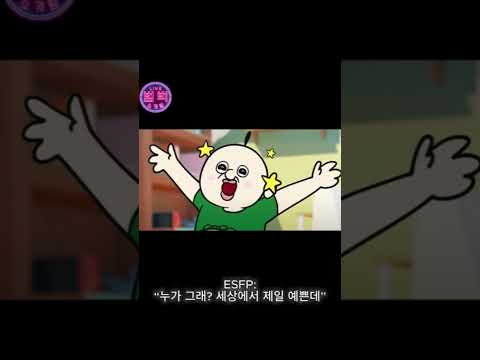
How to Deal with Chuseok Family Conflict Using MBTI
As the 2026 Chuseok holiday (September 24-27) approaches, many people feel not only excitement about reuniting with family but also a significant psychological burden. In fact, according to a 2024 survey, 35.8% of adult men and women experience stress during the holidays, citing 'meddling and interference from family and relatives' as the main cause. Excessive interest in personal matters, in particular, is a major burden for many (Saramin, 2023.09).
Such conflicts are not simply a matter of generational gaps or personal issues; they can stem from differences in how each person perceives the world and communicates. The MBTI (Myers-Briggs Type Indicator) can be a useful tool for understanding these differences, reducing misunderstandings among family members, and building healthy relationships. This article will analyze potential conflict situations during the Chuseok holiday based on the four MBTI preference dichotomies and explore wise communication methods to handle them.
1. MBTI Indicators' Conflict Points and Solutions at a Glance
Conflicts that commonly arise among family members during the holiday period are closely related to the four MBTI preference dichotomies (Energy Direction, Perceiving Functions, Judging Functions, and Lifestyle). The following table summarizes the conflict patterns and basic coping strategies for each indicator.
| Indicator | Point of Conflict | Solution |
|---|---|---|
| E (Extraversion) vs I (Introversion) | Energy Management: I-types easily get drained amidst constant guest greetings and conversations, while E-types enjoy and gain energy from these interactions, leading to conflict. | I-types should consciously secure alone time to recharge, and E-types need to be considerate by respecting the other person's 'drained' signals and giving them space. |
| S (Sensing) vs N (Intuition) | Communication Style & Values: S-types value holiday traditions and concrete realities (food, procedures), while N-types are more interested in new methods or the underlying meanings and possibilities of conversations, leading to clashes. | Acknowledging each other's perspectives is key. S-types should not dismiss N-types' ideas as 'daydreaming,' and N-types should respect the realistic contributions and importance of procedures valued by S-types. |
| T (Thinking) vs F (Feeling) | Decision Making & Advice: T-types offer objective, logical advice to solve problems, but F-types, who prioritize emotional support and empathy, may get hurt. | T-types should first read the other person's emotions and add expressions of empathy before giving advice, while F-types should try to understand T-type advice as an attempt to solve the problem, not as personal criticism. |
| J (Judging) vs P (Perceiving) | Schedule Management & Chore Division: J-types want systematic plans and role assignments, but P-types prefer to be flexible and adapt to situations as they arise, causing conflict. | Before holiday preparations begin, divide roles so that J-types create the overall plan and P-types flexibly handle variables. Collaboration that utilizes each other's strengths is necessary. |
2. Wise Communication for Different Situations: 'I-Message'
In conflict situations, 'You-Messages' that blame the other person can provoke defensiveness and worsen the situation. The 'I-Message,' developed by psychologist Thomas Gordon, is an effective communication technique that reduces conflict by honestly conveying one's own thoughts and feelings with 'I' as the subject. The key is to clearly communicate **① the situation (fact), ② my feelings, and ③ my wish (request).**
Example Situation: When asked about career, marriage, plans for children, etc.
- Typical Response (You-Message): "Why do you keep asking about that? It's pressuring."
- Applying I-Message: "(①When you ask about my marriage plans,) (②I honestly feel a bit lost and pressured because I don't have any specific plans yet.) (③It would be a great source of strength for me if you could trust and wait for me to share good news when it comes.)"
This method can be a safe channel for types prone to avoiding conflict, like INFP or INFJ, to express their feelings. For more direct types, like ESTP or INTJ, it can be a way to clearly convey their intentions without hurting the other person's feelings.
3. Understanding Generational Conflict: SJ Guardian Parents and NP/SP Children
Holiday conflicts, especially with the parent generation, become clearer when viewed through David Keirsey's Four Temperaments. The parent generation often has a high proportion of the SJ (Sensing-Judging, Guardian) temperament, which values tradition, responsibility, and stability. They consider it their important duty to uphold holiday traditions and ensure the family's well-being (as of May 2024).
On the other hand, the younger generation has many with the NP (Intuitive-Perceiving) temperament, which values autonomy and exploring possibilities, or the SP (Sensing-Perceiving) temperament, which seeks free experiences (as of May 2024). For them, the holiday is a time they hope to use for rest, recharging, or new experiences.
This difference in temperament becomes a source of conflict. To SJ parents (e.g., ESFJ), their children's behavior may seem irresponsible and disrespectful of tradition. To NP/SP children, their parents' customs may feel irrational and oppressive to individual freedom. Simply understanding these temperamental characteristics can help one accept that 'it's not a personal attack, just a difference,' reducing unnecessary emotional drain.
4. Holiday Preparation Checklist for Conflict Prevention
Preparing physically and psychologically before the holiday begins can significantly reduce stress. Use the list below to create your own holiday preparation plan.
- Psychological Energy Check: Do I gain or lose energy from interacting with people? (Especially for I-types) Plan a minimum amount of time to be alone each day.
- Prepare Answers for Expected Questions: Think of one or two of your own answers to recurring awkward questions (about career, marriage, salary, etc.). Prepare concise and polite responses using the 'I-Message' technique.
- Coordinate Roles in Advance: If role division for chores like housework or driving is expected, discuss and reach a general agreement with family before the holiday. (Especially effective for J-types)
- Create a List of Safe Conversation Topics: Instead of high-conflict topics like politics, religion, or comparing children's grades, prepare some light and positive topics such as recent movies or dramas, travel experiences, or stories about pets.
- Secure a Physical Space: Identify a space (a small room, a balcony, a nearby walking path, etc.) where you can temporarily retreat if a conversation gets heated or you feel drained.
5. Frequently Asked Questions (FAQ)
Q1. Can't I get along with family members with whom I have bad MBTI compatibility? A. That's not the case. MBTI is not a tool to measure whether a personality is good or bad, or to gauge ability; it is an indicator of an individual's preferred tendencies. Poor compatibility simply means you communicate and process information differently, it does not determine the quality of a relationship. Rather, if you use it as an opportunity to understand and respect each other's differences, you can build a deeper and healthier relationship.
Q2. What should I do about family members who keep crossing the line even after I try to talk to them? A. If your boundaries are not respected even after expressing your wishes multiple times using 'I-Messages' or other methods, you can try physical distancing. This involves firmly saying, "I don't want to talk about this topic anymore," and then temporarily leaving the space. If the conflict escalates to the level of verbal abuse or emotional mistreatment, it is important not to try to resolve it alone and to seek help from the professional counseling services listed below.
Q3. Would it be helpful to tell my family my MBTI type? A. It depends on the situation. If your family members are positive and open-minded about MBTI, sharing your types can be helpful for broadening understanding. However, if there is a risk they might use MBTI as another yardstick for 'judgment' or to label you, saying things like 'You're a XXXX, that's the problem,' there is no need to reveal your type. The important thing is not to defend yourself by saying 'I'm an I-type,' but to concretely explain your state and needs, such as, 'I get drained when I'm around many people for a long time, so I need a little time to myself.'
6. Emergency Support and Psychological Counseling Contacts
If stress from family conflict becomes unbearable, or if a crisis such as domestic violence occurs, do not hesitate to ask for help from professional organizations.
-
Ministry of Gender Equality and Family's Family Counseling Hotline (1644-6621)
- Services: Psychological counseling for pre/post-holiday family conflicts, marital issues, etc.
- Hours: 24/7, year-round
- Fee: Paid (standard call rates apply)
-
Ministry of Health and Welfare's Suicide Prevention Hotline (109)
- Services: Mental health crisis counseling for depression, suicidal impulses, etc.
- Hours: 24/7, year-round
- Fee: Free (consolidated to number 109 as of January 1, 2024)
-
Women's Emergency Hotline (1366)
- Services: Emergency counseling and connection to protection services for crisis situations like domestic violence, verbal abuse, etc.
- Hours: 24/7, year-round
- Fee: Free